
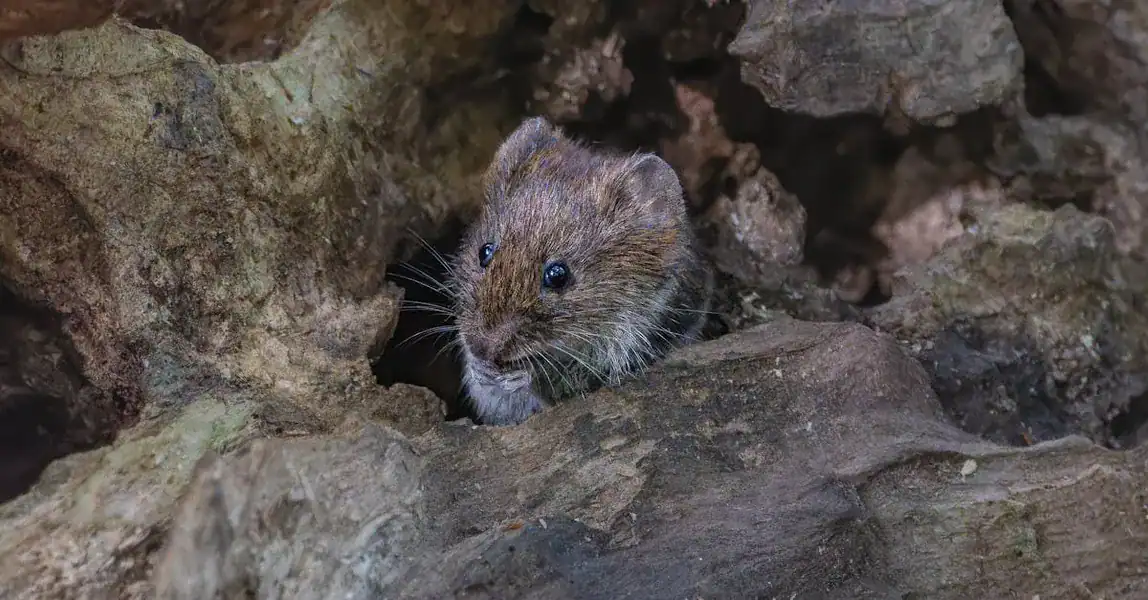
Voles -- sometimes called meadow mice or field mice -- are small rodents that live almost entirely at or just below ground level. The montane vole and prairie vole are the species most commonly encountered in Colorado Springs residential and suburban areas. They are not true mice despite the nickname, and they behave quite differently from house mice or deer mice.
Voles are herbivores. They eat grasses, roots, bulbs, bark, and the crowns and stems of garden plants. Unlike gophers, which tunnel deep underground, voles create shallow runway systems just beneath the soil surface or through dense grass -- often invisible until snow melts in spring and reveals the network they have been building all winter. Snow cover is actually a period of peak vole activity, as it provides insulation and concealment while they feed on grass crowns and plant roots at ground level.
They reproduce extremely rapidly. A female vole can produce five to ten litters per year with three to six pups per litter, and young voles reach reproductive maturity in as little as three weeks. Vole populations go through boom and bust cycles -- in peak years a single property can support dozens of animals, and the damage during those periods is severe. Populations typically crash after peak years but rebound quickly if conditions remain favorable.
Voles are prey animals and are active both day and night. They stay close to cover -- dense grass, ground cover plants, mulch, and snow -- and avoid open areas where they are exposed to predators. Properties with heavy mulching, dense low plantings, or unmaintained grass edges provide ideal vole habitat.
Voles are not a protected species in Colorado, so there are no legal restrictions on trapping and removing them. DIY vole control is achievable for small infestations, but the rapid reproduction rate means that incomplete control allows populations to rebound quickly.
What you can try:
Where DIY falls short: Vole populations in peak cycle years can be large enough that trapping without a systematic plan produces minimal results. The runway systems in an established infestation cover significant ground, and trapping only the most obvious sections leaves the rest of the population intact and reproducing. For large infestations, commercial properties, or situations where previous DIY attempts have not produced results, professional trapping is significantly more efficient.
K2 Kritter Solutions uses targeted trapping methods to clear vole infestations systematically across the full extent of active runway systems -- not just the most visible spots.
Vole damage is worst in late winter and early spring when snow melts and reveals what has been happening at ground level all season. By then the damage is already done. The time to address a vole problem is before populations peak -- and that means acting in fall when activity is building, not waiting until spring when the lawn is already destroyed.
Call K2 Kritter Solutions at (719) 358-1856 or fill out our contact form to schedule an inspection. We will assess the extent of the infestation and get a plan in place before it gets worse.