
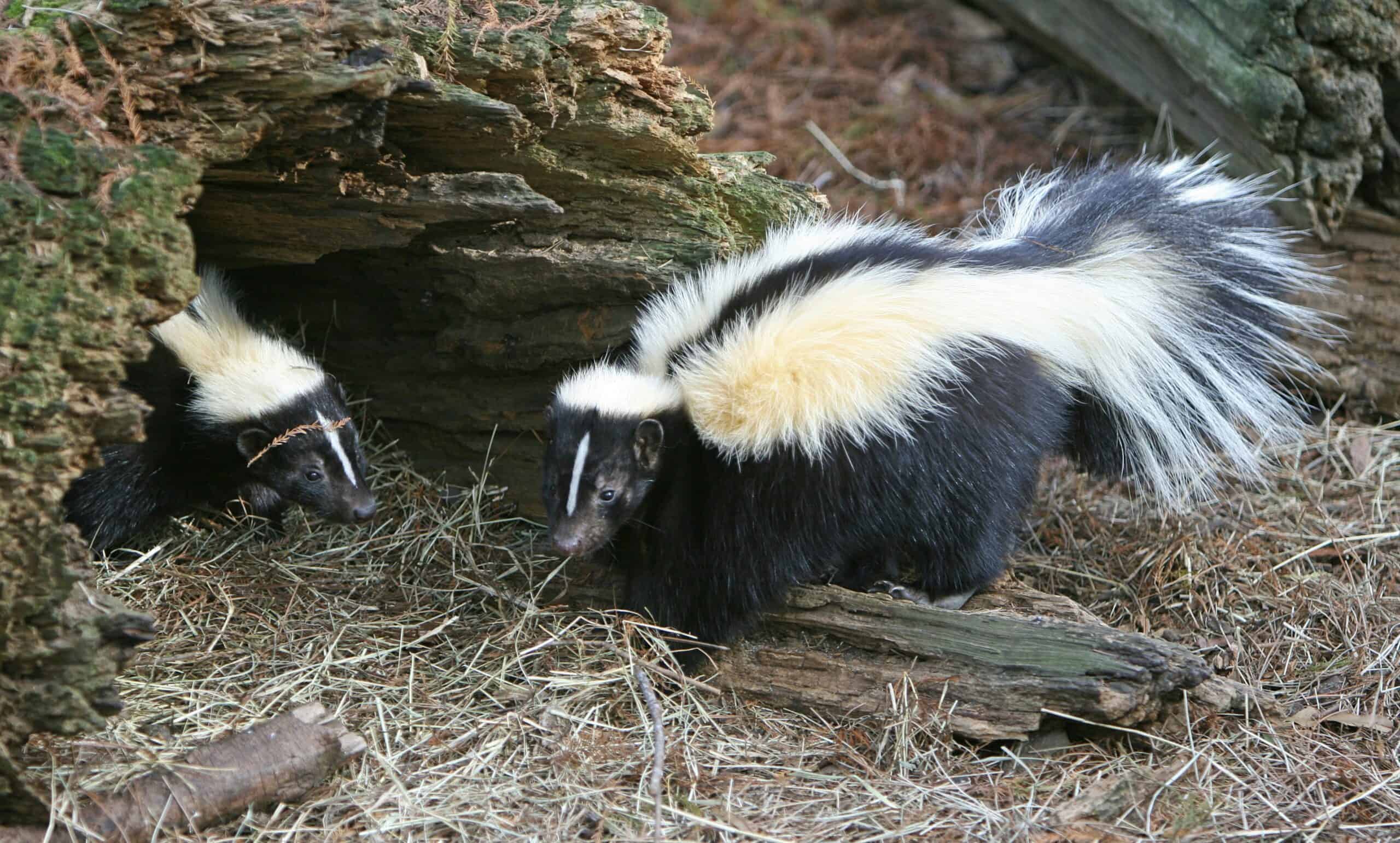
Skunks in Colorado Springs: More Than Just a Smell Problem

Quick Links
Get A Quote
skunk removal
Most people think of skunks as a nuisance rather than a genuine wildlife problem -- until one moves in under their deck, into their crawlspace, or beneath their shed. At that point the situation changes fast. The spray risk alone makes every trip outside a gamble for your family and pets, but skunks also dig, burrow, and cause structural and landscaping damage that compounds over time. A skunk denning on your property is not going to relocate on its own, and attempting to evict one without the right approach usually results in the one outcome everyone is trying to avoid.

K2 Kritter Solutions handles skunk removal throughout the Colorado Springs area using humane trapping and relocation methods that get the animal out without triggering a spray event -- or at least minimizing that risk significantly.

Skunk Behavior and Habits

The striped skunk is the species almost universally encountered in Colorado Springs residential and suburban areas. They are omnivores and highly adaptable, feeding on insects, grubs, small rodents, bird eggs, fruit, and whatever human food scraps they can access. Their digging behavior -- turning over soil to find grubs -- is often the first sign of skunk activity in a yard before a den is discovered.

Skunks are primarily nocturnal and solitary outside of breeding season. Breeding occurs in late winter, typically February and March, with kits born in May and June. A female with kits is particularly likely to hold a den site and defend it -- which makes spring the most common and most complicated time for skunk removal calls.

Skunks are not true hibernators but become significantly less active during cold weather, often sharing a communal den with several other skunks through the winter. An apparently abandoned den in fall may have multiple animals in it by December.

They are one of the primary carriers of rabies in Colorado. A skunk that is active during daylight hours, appears disoriented, or is behaving aggressively is a serious concern and should be treated as a potential rabies case. Do not approach it.

Skunk spray is a sulfur-containing compound -- thiol -- that can carry up to 10 feet with accuracy and is detectable by humans at extremely low concentrations. A direct hit on a dog or the exterior of a home is a significant remediation project. The spray can also cause temporary blindness and nausea in direct contact situations.

Signs You Have a Skunk Problem

  • Skunk odor near a specific structure. A persistent musky or sulfur smell near a deck, shed, porch, or crawlspace access point is the most obvious indicator of a den. The smell does not have to be a fresh spray -- skunks carry a baseline odor that accumulates in den areas.
  • Digging in your lawn. Skunks dig small, shallow holes -- typically 3 to 4 inches wide -- while foraging for grubs and insects. A lawn with multiple small excavations appearing overnight is a strong indicator of skunk activity.
  • Fresh digging near a structure's foundation. Skunks dig to create or access dens under decks, sheds, porches, and crawlspaces. Fresh soil displaced near a gap in your foundation or structure indicates active denning.
  • Sightings at dusk or dawn. A skunk seen regularly near the same structure or area of your yard is almost certainly denning nearby.
  • Pet encounters. A dog or cat that comes in smelling of skunk spray was in the wrong place at the wrong time. Repeated encounters near the same area of your yard indicate a den close by.
  • Grub damage in lawn. Skunks are efficient grub hunters. If your lawn has both small digging holes and signs of grub damage -- brown patches, spongy turf -- skunks are a likely contributor.

Can You Handle Skunks Yourself?

Skunks are classified as a furbearer species in Colorado, which means trapping and relocation requires a license. That rules out DIY trapping for most homeowners. Beyond the legal issue, there is an obvious practical problem -- trapping a skunk incorrectly, approaching a trap too quickly, or mishandling the animal almost guarantees a spray event.

What you can try:

  • Eliminate food sources. Remove accessible grub populations with appropriate lawn treatment if grubs are a confirmed problem. Secure trash, remove fallen fruit, and do not leave pet food outside. Reducing the food draw reduces the appeal of your property as skunk habitat.
  • Exclude potential den sites before they are occupied. If you have open voids under decks, sheds, or porches, seal them off with hardware cloth before skunks move in. Bury the hardware cloth at least 12 inches and angle it outward to prevent digging under it. Do this in late summer or fall when skunks are less likely to already be denning.
  • Motion-activated lights and sprinklers. Can deter skunks from frequenting specific areas of your yard, particularly for foraging. Less effective once a den is established.
  • Exclusion with a one-way door. If you are confident a skunk is denning under a structure and you want to try excluding it yourself, a one-way door installed over the entry point allows the skunk to exit but not re-enter. This only works safely if you are certain no kits are present -- sealing kits inside creates a dead animal problem and does not resolve the infestation. This approach also still leaves you with an unsealed void that another skunk can enter.

Where DIY falls short: The spray risk alone makes skunk trapping a job most homeowners are not equipped to handle. Professional trappers use covered traps and specific handling techniques to minimize spray risk during capture and transport. If a den has kits, the whole family group needs to be addressed together. And exclusion work that does not permanently seal the void simply transfers the problem to the next skunk that comes along.

Get Skunks Off Your Property Without the Spray

K2 Kritter Solutions handles skunk removal throughout the Colorado Springs area. We trap and relocate humanely, handle kits when they are present, and seal the entry points so your deck, shed, or crawlspace does not become a revolving door for the next animal that comes along.

If you are smelling skunk near your home, finding digging in your lawn, or dealing with a pet that keeps getting sprayed, call us before the situation escalates. Reach us at (719) 358-1856 or fill out our contact form to schedule an inspection.

Sign Up To Newsletter
Copyright K2 Kritter Solutions 2026 All Rights Reserved.