
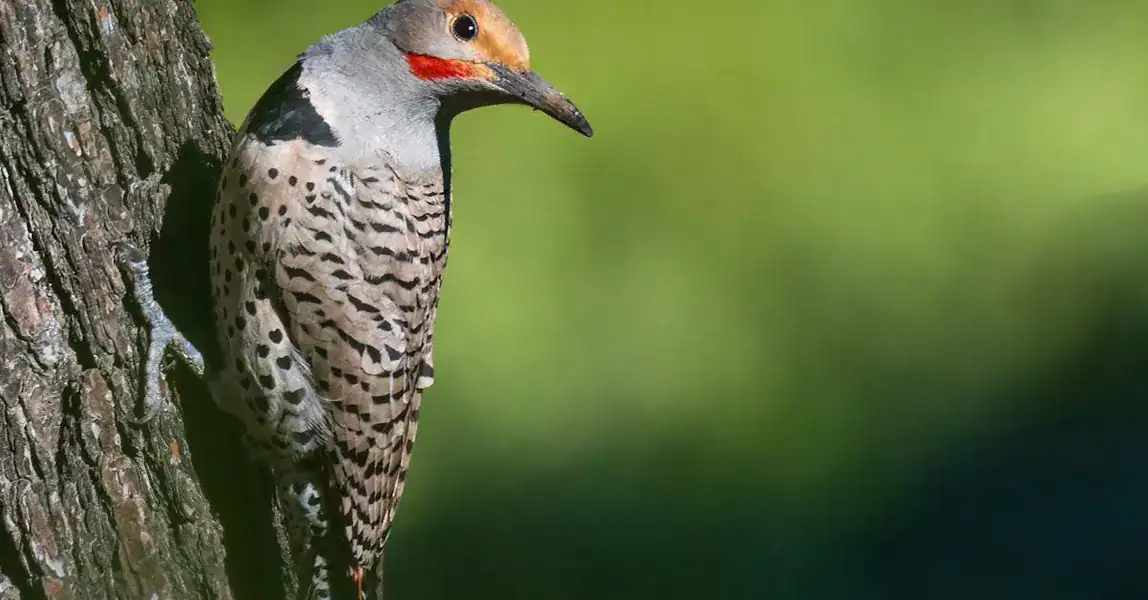
Northern Flickers in Colorado Springs: When Woodpeckers Target Your Home

Quick Links
Get A Quote
flicker removal
The northern flicker is one of Colorado's most recognizable woodpeckers -- and one of the most frustrating birds for homeowners to deal with. Unlike many wildlife problems that unfold quietly, flickers announce themselves. The hammering on your siding, eaves, or chimney cap at 6am is hard to ignore, and the damage they leave behind is more serious than most people expect.

Flickers are a federally protected migratory bird species under the Migratory Bird Treaty Act. That means you cannot harm, kill, or trap them without a federal permit. Dealing with a flicker problem the right way means using deterrents, exclusion, and in some cases professional intervention -- not extermination.

Flicker Behavior and Habits

Northern flickers are ground-feeding woodpeckers that eat ants, beetles, and other insects -- but they do not limit their pecking to trees. They peck at structures for three distinct reasons, and knowing which one applies to your situation matters for how you address it.

Foraging. If a flicker is pecking in a focused, methodical pattern on your siding or eaves, it likely hears or smells insects inside the wood or wall cavity. This is a sign of an underlying insect problem as much as a bird problem.

Drumming. Flickers drum loudly on resonant surfaces -- metal chimney caps, gutters, and wood siding -- to establish territory and attract mates. This is most common in spring. The drumming itself does not create large holes, but it is relentless and often happens at sunrise.

Nesting. Flickers excavate nest cavities in wood. If they are boring large, round holes into your siding or eaves, they are looking for a place to nest. These holes are significant -- several inches in diameter -- and cause real structural damage if left unaddressed.

Flickers are persistent and will return to the same spots repeatedly. A structure they have used successfully for foraging or nesting becomes a preferred site they will come back to season after season.

Signs You Have a Flicker Problem

  • Loud, rapid drumming on your home. Particularly on metal surfaces, gutters, or wood siding in early morning. This is territorial behavior and most common in spring.
  • Pecked holes in siding or eaves. Small, irregular holes indicate foraging. Large, round holes 2 to 3 inches in diameter indicate nesting excavation.
  • Visible damage to cedar, redwood, or wood composite siding. Flickers are particularly drawn to these materials, especially if they are weathered or harbor insects.
  • Repeated activity at the same spot. Flickers are creatures of habit. Once they identify a productive site, they return to it daily.
  • Wood shavings or debris below a specific spot on your exterior wall. A sign of active excavation.

Can You Handle Flickers Yourself?

Because flickers are federally protected, your options are limited to deterrence -- not removal or harm. That said, there are legitimate DIY steps worth trying before calling a professional.

What you can try:

  • Visual deterrents. Hanging reflective tape, mylar strips, or predator decoys (plastic owls or hawks) near the active pecking site can discourage flickers, particularly for drumming behavior. These work best when installed immediately and moved periodically so the bird does not habituate to them.
  • Physical exclusion. Hanging bird netting or hardware cloth over the affected area of siding or eaves prevents access to the spot. This is more effective than visual deterrents for persistent foragers and nesters.
  • Address the insect problem. If a flicker is foraging, there are insects in or behind your siding. Eliminating the insect source removes the reason the bird keeps coming back. This may require a pest inspection.
  • Repair holes promptly. Open holes attract not just the original flicker but other birds and wildlife. Patch them quickly with a material that matches your siding.

Where DIY falls short: If a flicker has already excavated a nest cavity and eggs or chicks are present, you are legally prohibited from disturbing the nest until the birds have fledged. At that point the nest can be removed and the hole repaired, but the window to act has already narrowed considerably. If the problem is recurring season after season, professional deterrent installation is the more reliable long-term solution.

K2 Kritter Solutions can assess the damage, identify whether an underlying insect issue is driving the behavior, and install exclusion measures that actually hold up.

Stop Flicker Damage Before It Gets Worse

A flicker that has found your home is not going to move on without some intervention. The longer the pecking continues, the more damage accumulates -- and the more established that spot becomes as a preferred site. Do not wait until you have a 3-inch hole in your siding to make the call.

Call us at (719) 358-1856 or fill out our contact form to schedule an inspection. We will tell you exactly what you are dealing with and what it will take to resolve it.

Sign Up To Newsletter
Copyright K2 Kritter Solutions 2026 All Rights Reserved.